Common signs
What parents may notice
- Whistling sound while breathing
- Fast breathing
- Cough with exercise or at night
- Chest tightness in an older child
- Symptoms with colds
- Reduced play or feeding
- Repeated need for inhaled medicine
Wheezing is a high-pitched sound caused by narrowed airways, usually heard while breathing out. Viral infections are a common trigger in young children, while recurrent episodes may be associated with asthma, allergy or other airway conditions. The child's age, breathing effort and pattern of recurrence guide evaluation.
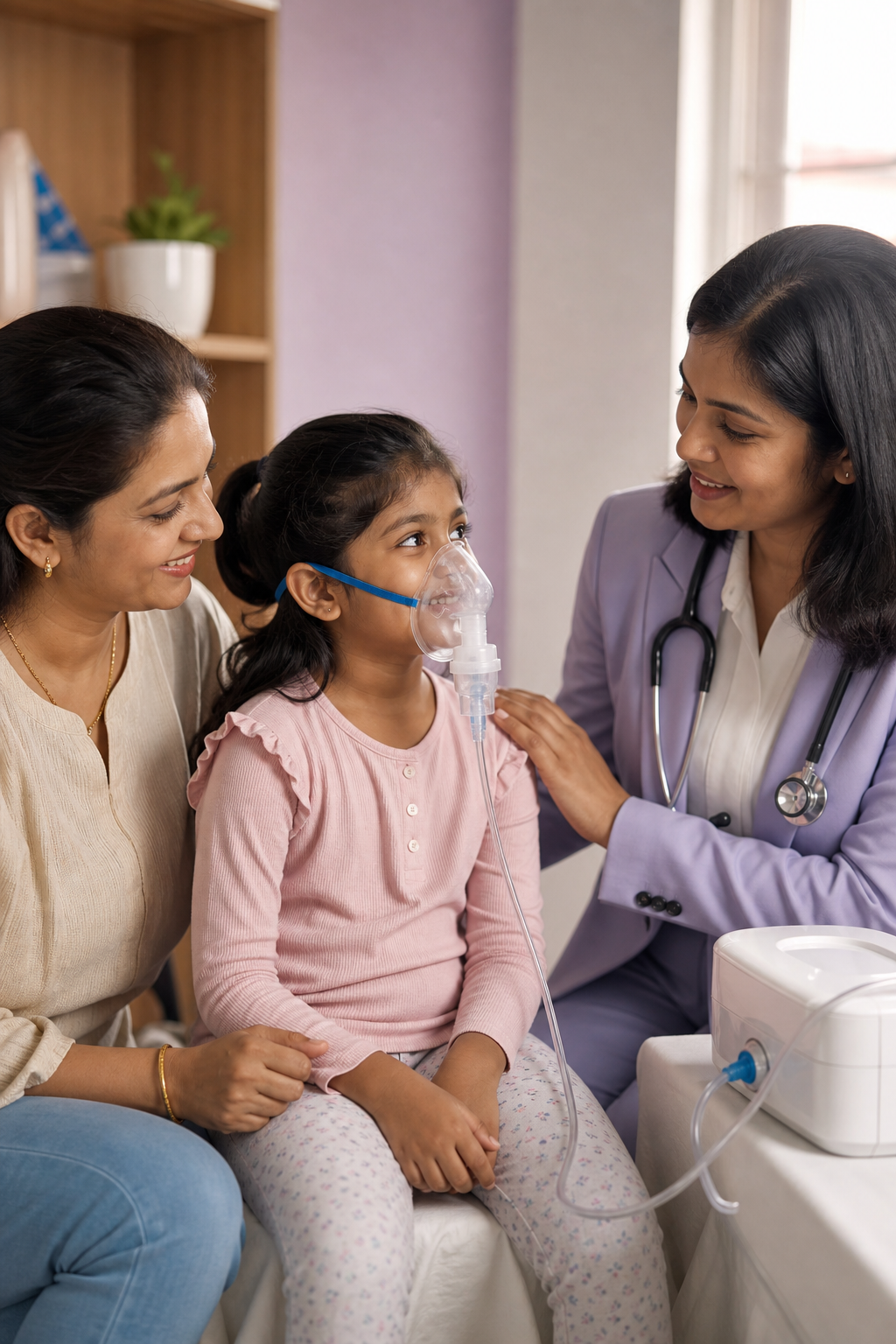
Possible causes include viral wheeze, asthma, allergy, inhaled foreign body and less common structural or lung conditions. A sudden first episode after choking needs urgent assessment.
Not what we wish you'd ask. What you're actually thinking when you find this page.
Book a consultationNo. Wheezing can occur with infections and several other conditions, especially in young children.
A safe recording may help describe an intermittent sound, but it does not replace examination.
Yes. Correct spacer technique improves delivery of inhaled medicine in many children.
Most children can remain active when asthma is well controlled and a clinician has provided an appropriate plan.
Seek immediate care for severe breathing difficulty, blue lips, exhaustion or poor response to the child's emergency plan.
Speak with Paediatric Pulmonology and Allergy or contact our team to organise the right starting point.